Wednesday, April 16, 2014

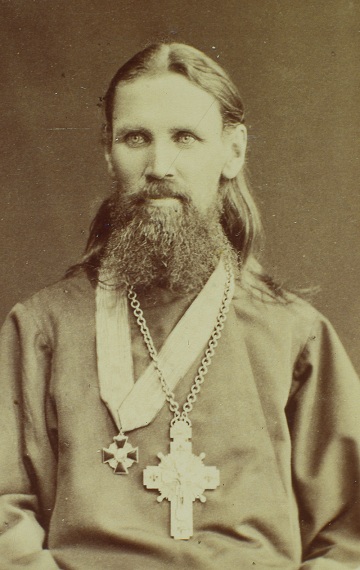
Taking Stock of Ourselves: On Clean Wednesday - St John of Kronstadt


Beloved, we are already on our fourth day of fasting and our fourth day of attending the divine services. [1] Is our fasting of any benefit to our souls? Each of us needs to ask himself this question, thereby direction attention to his heart. Has there been a holy change in it? Has it ceased loving and committing sin? Further, one must take stock: Have the divine services had an effect on me? Do I leave church with a pious disposition? Or do the services pass by like something alien to me, so that I stand in church with cold indifference, praying only out of habit, making prostrations without heartfelt contrition for my sins? Thus, beloved brethren, do we need to take stock of the holy deed of fasting: is it going successfully, or is our labor perishing in vain? If we take stock of worldly and often unimportant matters, then why not cast an examining eye upon this holy task?

Just remember, beloved, that for which you are preparing. You are preparing to approach the heavenly, most pure, life-giving, and dread Mystery of the Body and Blood of Christ our God; you are preparing to be united with the most pure God Himself. Oh, how can you then not turn all your attention to fasting! Thus, beloved, let us cast a stern gaze upon our fasting and make every effort to use it for the good of our souls. How can we make us of it for good? Most importantly, let us do this: let each of us take control of his own heart. The greatest attention should be paid to the heart: here is all the evil of man. Or, better, here is sinful, ungodly man himself; here is the workhouse of sin. Beloved, our hearts have completely turned away from God, their Creator, and turned wholly towards the world and its charms; in them are all our lusts, all our passions, all that is contrary to God.

As you can see, we need to make a major turnabout: from love for the world, its pleasure and sin, we ought to turn to love for God, Whom we are to love first and foremost. But this is no easy matter, especially for someone who strongly loves the world: in the Apostle’s words, the friendship of the world is enmity with God (James 4:4). But let us not fear the difficulties, for what is difficult or impossible for us is easy and possible for God: with God all things are possible (Matthew 19:26). And here, first of all, the divine services can help you in your holy task of turning from the world to God: just stand and listen to everything attentively, with a spirit of humility, and then holy thoughts and feelings will surely come to you. It cannot happen that someone who is humble and attentive, who desires to be united with God, will not be visited by a contrite and compunctionate spirit.

But you do not understand much [of the services]; but if you do understand at least some of it, then you already understand much. That which you do understand, take into your heart and contemplate; from the holy words of the Church, multiply your own holy thoughts and feelings. Then, with God’s help, all will go well. After all, our souls are not completely barren land for good. How could that be, when it has drunk the rain of God’s grace that has fallen abundantly upon it? Further, consider that perhaps many of you are now fasting for the final time; perhaps death will soon catch you unawares and you will not be able to have Confession and Communion of the Holy Mysteries before death. Indeed: Now also the axe is laid unto the root of the trees: therefore every tree which bringeth not forth good fruit is hewn down, and cast into the fire (Matthew 3:10).

It is with this kind of attention to self that each of us needs to practice our fasting, so that we can without fail be cleansed from our sins, perhaps for the final time. Further, imagine more often that, after your fasting and Confession, you will approach the all-pure Mysteries. But if you approach with an uncorrected heart, unworthily, then you will commune to your condemnation and judgment. Then you shall be guilty of the Body and Blood of the Lord (1 Corinthians 11:27); after Communion not only will you be no better, but you will make matters even worse.

With these and similar reflections, reinforce yourselves in your struggle of fasting and pray in church as sincerely as you can, with all your heart. As sincerely as you can, say more often to the Lord Who heeds you: God, be merciful to me a sinner! God, cleanse me a sinner! I have sinned without number, Lord forgive me! Recall that these words alone – God be merciful to me a sinner (Luke 18:13) – justified the publican. Why? Because they were spoken without any pretence, from the heart, from perfect recognition of his guilt before God and his resolve to correct himself without fail. And we all, beloved, are so sinful that we have no excuse before God; we are not worthy to lift our eyes to heaven. How can we, too, not say with all our souls: God, be merciful to us sinners! God, forgive us sinners! We have sinned without number, Lord forgive us! Amen.

Tuesday, April 15, 2014

St. Symeon the New Theologian: Implore God ......


“Implore God with prayers and tears to send you a guide who is dispassionate and holy. But you yourself should also study the divine writings – especially the works of the fathers that deal with the practice of the virtues – so that you can compare the teachings of your master with them; for thus you will see and observe them as in a mirror. Take to heart and keep in mind those of his teachings that agree with the divine writings, but separate out and reject those that are false and incongruent. Otherwise you will be led astray. For in these days there are all too many deceivers and false prophets. “

Monday, April 14, 2014

ST JOHN OF KARPATHOS - ON SNARING SATAN


'...we can lay for him (Satan) traps and snares and ambushes that are far more effective and terrible.'

Saint John of Karpathos

The enemy lurks like a lion in his den; he lays in our path hidden traps and snares, in the form of impure and blasphemous thoughts. But if we continue wakeful, we can lay for him traps and snares and ambushes that are far more effective and terrible. Prayer, the recitations of psalms and the keeping of vigils, humility, service to others an acts of compassion, thankfulness, attentive listening to the words of scripture -- all these are a trap for the enemy, an ambuscade, a pitfall, a noose, a lash and a snare.


Sunday, April 13, 2014

St. Theophanes On Humility


It is wrong to regard as a virtue the excessive grief, which men feel after committing a sin, not realizing that it is caused by pride and a high opinion of themselves, based on the fact that they rely too much on themselves and their own powers. For by thinking that they are something important they undertake too much, hoping to deal with it by themselves. When the experience of their downfall shows them how weak they are, they are astounded, like people, who meet with something unexpected, and they are cast into turmoil and grow faint-hearted. For they see, fallen and prone on the ground, that graven image which is themselves, upon which they put all their hopes and expectations. This does not happen to a humble man who trusts in God alone, expecting nothing good from himself. Therefore, when he falls into some transgression, he also feels the weight of it and grieves, but is not cast into turmoil and is not perplexed, for he knows that it happened through his own impotence, to experience which in downfalls is nothing unexpected or new to him.

Friday, April 11, 2014

Metropolitan Chrysostomos


The Orthodox Family
by Archbishop Chrysostomos

The Orthodox Church exalts the family. The Church itself is often characterized by the Fathers in images drawn from the family. In the family, as in the Church, basic values are formed, the soul is shaped and established, and the path of salvation is set forth. The family is that warm place where the leaven of the Faith is nurtured, where we first begin to rise to full life in Christ. It is for this reason that every Bishop, every Priest, every monastic, and all pious laymen remember, in their daily prayers, their mothers and fathers, that their "days may be long on the earth." It is for this reason that, even after their repose, we remember our fathers and mothers and family members, praying for them fervently and, in our prayers, reaching across the chasm of death to be with them even in the afterlife, in the spiritual world. So special is the family that we remember those in error and heresy and sin even more dearly than those upright and unwavering in the Faith. This is the wonder of the family.

The Orthodox family, however, is always understood in its spiritual context. It is a spiritual unit. The selfish, social family, which triumphs the rights or privileges of blood ties, is for us Orthodox not a true family. An economic unit that uses family relationships to attain worldly possessions or wealth; the social unit turned in on itself, making the family responsible only for itself, that family which is a "god," the single most important thing in life, that thing most worth fighting for-these, too, are not families for the Orthodox believer. As exalted and sacred as the family might be, our first loyalty as true Christians is to God. Anything which comes before Christ, to paraphrase Holy Scripture, is not worthy of Christ. Anyone who places the priorities of the family before the Church and the commandments is a cultist, betraying both the Church and the authentic family. A true family is not worldly. A true family is an Icon of the Church and the brotherhood of all mankind. A true family does not confine its love to those within its boundaries, but extends to its neighbors (and even its enemies) the love which has been developed, cultivated, and refined within the family.

In contemporary America the social family, the family created without spiritual goals, is turning ugly. On Christmas and holidays, for example, we gather in our homes, ignore the poor, resent the "intrusion" of friends and acquaintances into our food- and drink-filled festivities, and pay homage to Christ or the theme of the holiday in perfunctory services or commemorations designed around the family activities-if any homage is paid at all. We have abandoned, to a great extent, the custom of visiting the infirm and needy on holidays. Rather, we have turned to a social selfishness that extends out from these holidays to the whole year, poisoning and killing society itself, making people cold, alien, and insensitive to others. And even the family itself suffers. Family members embrace, relate to one another in empty and inane exchanges of words, and often hide their need for real love and affection-for the true love and affection known only to the spiritual family, to that family which reaches beyond itself. Thus the model American family which so shocks us Christians, but which predominates in the society around us: a family beset by drug abuse, alcohol, the killing comforts of wealth and material gain, divorce, and even suicide!

So far has the American family strayed from the spiritual image that, if a young man or woman is to go away today and enter the monastic life, dedicating himself to prayer for the family and others, this is an occasion for shame and embarrassment. The family unit may even explode in hatred, decrying the personal separation that such a life might entail. Deep love, that love which survives separation (and even death), is disappearing from our families. We delight in those who succeed in the emptiness of material life and remove even the privileges of the family from those who seek the spiritual life. How far we have come from the traditional Christian family, based as it was in the past-especially in our Orthodox societies-on spiritual values, in which a monastic or Priestly vocation was the cause of merriment and rejoicing. To such families, a monastic or Priestly vocation represents a total fulfillment of family goals, a realization of the Christian life, and a reification of Christian ideals. If we reflect on the contrast between the true family and the social unit qua family created in modern materialistic society, we can precisely glimpse what the true Orthodox family is.

Just as an army trains soldiers to battle the enemy for the sake of the homeland, so the true family, the Orthodox family, endows its children with the spiritual armor by which they can overcome temptation, battle sin, live exemplary and moral lives, gain union here on earth with God, fulfill the divine potential within man, and pass into the next life with the spiritual power to pray for family members left behind. A true Orthodox family teaches love to its members-that intuitive, spontaneous love natural to blood relations-and encourages them to go out into the world sharing this love with others and perfecting it to whatever degree possible. A true family moves out beyond itself. If family members should gain wealth or fame, these are secondary things. These accomplishments are measured only by the primary contribution that they make to the Church, to society in general, and to the fulfillment of Christian ideals. And if a family member should embrace monasticism, it is for this individual that the Church reserves the greatest praise: for one who can, without the reinforcement of family ties and the comfort of marital affection, show and give love unselfishly; for one who can, living in poverty, produce richness in his soul and heart; for one who can, in the face of the world's ridicule and scorn, maintain inner dignity; for one who can, though separated from his family, show more real love, in his prayers and example, than those present to it.

Though only part of my family is Orthodox, my own experience in entering the monastic life has not been as difficult as it might have been. But I have seen terrible cases of ill treatment, in which monastics have been hurt deeply by the attitudes of their own families-usually in the case of converts who enter monasticism from non-Orthodox families. Some families, lacking a spiritual understanding of the family itself, consider such monastics outcasts, betrayers of the family, and destroyers of the family unit. Every foul and vulgar motivation is attributed to the monastic. Hatred, resentment, and antipathy are engendered among family members for the monastic. We must reflect on these instances with sobriety, since they reflect an attitude which is now invading even the Orthodox family in this country, where the larger Orthodox jurisdictions have either no monastic institutions or-with very few exceptions-monastic institutions wholly foreign to anything in Orthodox tradition. Where are those mothers and fathers and sisters and brothers who would rejoice in offering up a family member to intense service to God, a service in which limited family love is lifted up to expansive spiritual love? Where are those who would give up the best, the strongest, and most beloved to a life of purity?

There could be nothing more pristine than the true Orthodox family. It is, after all, the crucible in which the elements of whole persons are formed. We should exalt such a family and pray that God will make us worthy to lead and to establish such families. At the same time, we must be careful not to accept as a true family that which is false! We must guard against mere social views of the family. And those families wrongly formed and wrongly operating we must call-by the power of love that even they have in their midst-back to the Christian image of the family that we see in the lives of Christ, the Theotokos, the Apostles, and the Martyrs and Saints.

From Orthodox Tradition, Vol. IV, No. 2, pp. 34-36.


+ Sermon on the Sunday of St. Gregory Palamas
Metropolitan Chrysostomos of Etna

Today, the second Sunday of the Great Fast, the Orthodox Church worldwide celebrates the memory of St. Gregory Palamas, fourteenth-century Archbishop of Thessaloniki and one of the greatest Fathers of the Orthodox Church.

Until this century, because of the influence of the West—the Jesuits in eighteenth-and nineteenth-century Russia and the Lutherans who were appointed as the Ministers of Religion under the first King of Greece, a German Lutheran, placed in power in Greece after its liberation from the Turkish Yoke at the beginning of the nineteenth century—, St. Gregory Palamas was a virtual mystery to Orthodox theologians. This man, whom we hymn as "ho phoster tes Orthodoxias" (the "Enlightener of Orthodoxy") and "to sterigma tes Ekklesias" (the "Pillar of the Church"), taught and lived our Faith in a purity which, except in the hidden confines of monasteries and in the hearts of the simple people—who could not articulate what they knew of Orthodoxy—, was lost to the neo-Papism of Patriarchalism, Western notions of "officialdom," and to nationalism and ethnicity, which are nothing more than a return to heathenism.

Even the life of this great Saint is obscured by modern Western ideas. One of the few commentaries on his life, in a book dedicated to the Pillars of Orthodoxy, refers to him as a member of the "Palamas" family, as though this great Saint were remembered for the nobility of his parents, who were, indeed, members of the Imperial Byzantine Court. Many names at the time, of course, were not like family names as we know them today, and the name "Palamas" was an honorific name derived, not from St. Gregory’s bloodline, but from the Greek word for "clapping," thus meaning that the Saint’s family was lauded and honoured. And so, this worldly honour was transformed by St. Gregory into spiritual honour, which we commemorate when we refer to him as "Palamas," one applauded for his spiritual stature. Nor was St. Gregory Palamas influenced by the Bogomils ( a heretical group), as the theologian Father John Meyendorff so wrongly taught; neither did he teach an innovative theology, as many modern Orthodox theologians teach. Rather, he codified and wrote about the deep, mystical theology of the Orthodox Church which is, indeed, a teaching passed down through the Fathers, both in writing and by word of mouth, from the time of the Apostles.

Orthodoxy, which is a living organism, developed and matured, under the guidance of the Holy Spirit, from an embryo that exists in the Scripture and which blossomed over the centuries. We do not, in fact, as Orthodox honour that which is ancient—since many heresies are as ancient as Orthodoxy—, but that which is mature and which fully expresses the spirit of that Christianity given to us by the Lord, as one Father tells us, preached by the Apostles, and preserved by the Fathers. St. Gregory Palamas was nothing more than a great Saint who focused us on mature Orthodoxy, on that fulness of the Faith that was manifest by his time, which had its roots in the Early Church, and which lives on today and is found beneath the false accretions to Orthodoxy that we must wipe away, if we are to find it in its authentic form. His is but the voice of the whole Church speaking maturely, beyond theologies, beyond nationalities, beyond administrative notions of the Church, and from its souls and heart, which speaks to all men, whether Orthodox or not, and which enlightens, vivifies, and transforms us Orthodox when we seek and achieve union with Christ.

The Orthodoxy which we know today, except for its core, has deviated, on the whole, from the standard of fully-developed Orthodoxy which St. Gregory Palamas characterized and placed before us, and this both in worship and in our theology: again, because of Western influence, but also because of the loftiness of Orthodoxy which we often obfuscate (make unclear) by our human pettiness and weakness.

Liturgically, we have come to think of Orthodoxy as a religion focused on the ritualistic worship of God. We do not worship God in our Church, as such; rather, we commune with God directly, through the convergence of Heaven and the earth in the symbols of worship. Our worship is not mere veneration, but participation in the timeless, eternal truth of Christ. Indeed, the culminating point of worship is the Divine Eucharist, in which we are made one with Christ. How far this is from our present-day theatrical worship: pews, lights, loud proclamations and singing, and all of the other things that go along with the theatre. Indeed, appealing, and falsely so, to the past, some Orthodox have even come to the perversion of congregational singing, thinking that the primitive services of the Early Church—where there were also ordained chanters, as many forget—can somehow replace the mature system of worship that we have inherited from the mature Church. We see this, too, in personal intimacy—excessive and emotional embracing, kissing, and so on—, which are inappropriate to the Christian and which come from passions and not from sobriety.

The purpose of worship—hearing the very voice of God in silence and with our minds and eyes darkened to the world, focused on the windows into the other world that are our Icons; our senses saturated by incense; our egos humbly subdued in pious standing and prayer—has been thwarted. Today, having adopted Western ideas of worship, we scream and sing at God, making such a din that we do not hear Him speaking to us. St. John Chrysostomos tells us that chanting, for example, is a double form of prayer. And since, in prayer, we hear God, how far our chanting and singing are from an act of listening. How far, indeed, we are from the experience of that small inner voice, through which God speaks to our hearts, when we seek so-called "active" participation in services. Our participation should be silence, submission, and awe before the splendour of God. And our prayers and chants should not be pronouncements before God, but supplications for God to speak to us and be with us. And so it is that, if we listen even to the prayers that accompany the hymn that we just sang before the Entrance with the Gospel, we hear supplications that Holy Angels will accompany us and be with us as we receive Christ, Who is truly present among us and who speaks TO US through our Church rituals.

In theology, few know the deep truths of our Church. Indeed, it is the purpose of Christian life to become one with God, even in this life, and to conquer and overcome our sexual passions, our greed, our envy, our jealousy, and sin itself—remaining always subject to sin and, because of our closeness to God, even more aware of our sinfulness; but, nonetheless, remaining unresponsive and resistant to sinful actions. Our union with God, which begins in this life, transforms our flesh—as we see in the relics of the Saints, which give off a sweet fragrance and often do not deteriorate—and transforms the world around us. This enlightenment is salvation, and the transformation of the world at the Parousia, the Second Coming, will express, in part, the power that comes from those who have been transformed in Christ and who have overcome and transcended this world of sin.

St. Gregory Palamas calls us back to the earliest Fathers, who taught, in simplicity, that Christ became man, so that men might become gods. By this, we do not mean the New Age nonsense of humans becoming God and usurping His power and Being, since God transcends all that we can ever be; rather, we mean that, by the ascetic struggle of transforming ourselves, becoming a peculiar people apart from the world, we take on the traits of Christ and become, as Scripture tells us, "partakers of the Divine nature," or, to translate the Greek original into idiomatic English, "participants in the Divine nature." God remains what He is, when we are united to Him, but we become what we are not, yet what we were created to be: Jesus Christs within Jesus Christ, as St. Maximos the Confessor writes, sons of gods within the Son of God. And again, this we accomplish by humility, the death of the ego, fasting, taking on Christian names, living a life centered on the Eucharist, and dedicated to purity and the Love of God. This is not something that we claim, like deluded New Agers, but is something which we accomplish and achieve by ascetic struggle in synergy with the Grace of God.

Finally, St. Gregory Palamas told us something of the nature of struggle, something of great importance in this age of ours, when we have so little appreciation for discomfort and when we seek comfort at all costs. There is in Orthodoxy no glory in suffering. These are Latin ideas beloved by modern Orthodox, but foreign to our Church’s true Tradition. There is no "offering up" of our sufferings, as the medieval Latins taught. Such things are an offense to God, Who does not wish recompense from man, but Who reaches us through love. When we suffer, then, according to the Hesychastic Tradition of the Church, in the inner Tradition which St. Gregory Palamas expressed in concordance with the teachings of the ancient Fathers, we do nothing more than affirm the Grace of God in all things—in human happiness, in human adversity, and in human triumph and loss. A true Christian becomes passive to the world and treats all things with a quiet acceptance. This is a sign of our communion with God, since, when we touch and live in the other world, yet still exist on earth, we gain a perspective which makes the things of this world less threatening and, to be sure, less alluring. Thus death is longer fearful, since we have beheld life as it continues beyond death. This passivity, which must underlie our natural emotions, is the core of our Faith; for through it, while remaining inhabitants of earth, we yet become partakers of the Heavenly.

Let us heed the message of St. Gregory and live our Faith in its profundity and with sobriety and passivity, accepting all things in a good way and seeking to rise above the moment to the timeless.


Thursday, April 10, 2014

ST JOHN OF KRONSTADT - ON DESPAIR

On Despair 
St. John of Kronstadt

Never despair in God’s mercy by whatever sins you may have been bound by the temptation of the Devil, but pray with your whole heart, with the hope of forgiveness; knock at the door of God’s mercy and it shall be opened unto you. I, a simple priest, am an example for you: however I may sometimes sin by the action of the Devil, for instance, by enmity towards a brother, whatever the cause may be, even though it may be a right cause, and I myself become thoroughly disturbed and set my brother against me, and unworthily celebrate the Holy Sacrament, not from wilful neglect, but by being myself unprepared, and by the action of the Devil; yet, after repentance, the Lord forgives all, and everything, especially after the worthy communion of the Holy Sacrament: I become white as snow, or as a wave of the sea, by the blood of Christ; the most heavenly peace dwells in my heart; it becomes light, so light, and I feel beatified. Then, indeed, I forget all troubles, anxieties, and the oppression of the enemy, I become entirely renewed, and as though risen from the dead. Do not then despair, brethren, whatever sins you may have committed, only repent find confess them with a contrite heart and humble spirit. Glory, O Lord, to Thy mercy! Glory, O Lord, to Thy long-suffering and forbearance!

You feel straitened upon earth from all sides. Everything betrays you; your relations, friends, acquaintances, riches, the pleasures of the senses, your own body; all the elements — earth, water, fire, air, light — play you false. Cling, therefore, to God alone, “with Whom is no variableness, neither shadow of turning,” [St. James 1:17] Who alone is Love.

You, sinner, who have fallen into the depths of evil, when you represent to yourself the multitude of your sins and fall into despair and hardness of heart, remember that the heavenly Father sent His only begotten Son, our Lord Jesus Christ, into the world for your salvation from sins and from eternal condemnation for them. Turn then with faith to this Mediator before God for men, imploring Him from the depths of your soul to wash away by His all-cleansing Blood, shed for us on the cross, your iniquities too; turn zealously to repentance, confessing your sins before His priest as before Himself, that you may be justified, after which, if the minister of the sacrament of penitence finds you prepared and fit, draw nigh to the holy cup and you shall be cleansed of your sins: peace shall flow into your soul like a river, and you shall be the son of the heavenly Father, “who was dead and is alive again, and was lost and is found.” [St. Luke 15:24, 32]

Believe firmly that the wickedness of the Devil in you and your own wickedness will never conquer the unspeakable, infinite mercy of God. Great is the wickedness of the Devil in you, but the mercy of God is infinitely greater. Therefore, in times of doubt, incredulity, blasphemy, malice, envy, avarice, covetousness, involuntary hypocrisy, entreat the Lord with hope, and be sure that His infinite goodness will incline Him to have mercy upon you, if you turn from your wickedness.

When the darkness of the accursed one [the devil] covers you — doubt, despondency, despair, disturbance — then only call with your whole heart upon the sweetest name of Jesus Christ, and in Him you shall find all — light, strengthening, trust, comfort, and peace; in Him you shall find the greatest mercy, goodness and bountifulness; all these mercies you will find contained in His name alone, as though in a rich treasury.

If the Lord were not long-suffering, if He were not the Lover of men, would He have borne with our great offences? would He have been incarnate? would He have suffered and died for you? would He have given you His most pure Body and Blood, upon which even the angels look with fear and trembling? would He have saved you from sin and spiritual death so many innumerable times? Had it been otherwise He would have said: “Be tormented, if you are so evil by nature; I will not deliver you again after having delivered you so often before.” But now, during all our life-time He bears with our innumerable offences, and still waits for our conversion. Glorify, then, His love and long-suffering. Picture to yourself what it would have been without Him, without Him to save? Horror and trembling fill the soul at the idea of it. But impenitent sinners will indeed be overtaken at the last by God’s wrath “in the day of wrath and revelation of the righteous judgment of God.” [Romans 2:5]

Unite your soul to God by means of hearty faith and you will be able to accomplish everything. Do powerful, invisible, ever-watchful enemies wage war against you? You will conquer them. Are these enemies visible, outward? You will conquer them also. Do passions rend you? You will overcome them. Are you crushed with sorrows? You will get over them. Have you fallen into despondency? You will obtain courage. With faith you will be able to conquer everything, and even the Kingdom of Heaven will be yours. Faith is the greatest blessing of the earthly life; it unites the man to God, and makes him strong and victorious through Him. “He that is joined unto the Lord is one Spirit.” [1 Corinthians 6:17]

Who does not know how difficult it is, without God’s special grace, for a sinner to turn from the way of sin that is so dear to him into the path of virtue? How deeply sin takes root in the heart of the sinner, and in all his being — how it gives the sinner its own way of looking at things, by means of which he sees them quite differently to what they are in reality, and shows him everything in a kind of alluring light. It is for this reason that we see that sinners very often do not even think of their conversion, and do not consider themselves to be great sinners, because their eyes are blinded by self-love and pride. And if they do consider themselves sinners, then they give themselves up to the most terrible despair, which overwhelms their mind with thick darkness and greatly hardens their heart.

When you pray that your sins may be forgiven, strengthen yourself always by faith, and trust in God’s mercy, Who is ever ready to forgive our sins after sincere prayer, and fear lest despair should fall on your heart — that despair which declares itself by deep despondency and forced tears. What are your sins in comparison to God’s mercy, whatever they be, if only you truly repent of them? But it often happens that when a man prays, he does not, in his heart, inwardly hope that his sins will be forgiven, counting them as though they were above God’s mercy. Therefore, he certainly will not obtain forgiveness, even should he shed fountains of involuntary tears; and with a sorrowful, straitened heart he will depart from the Gracious God: which is only what he deserves. “Believe that ye receive them,” says the Lord, “and ye shall have them.” [St. Mark 11:24]

Even the saints of God were at times seized with diabolical despair and despondency. What, therefore, can we sinners expect? O, the enemy often wounds us by the wrath, humiliation, and cruel despondency of the heart! We must continually turn to God and be every moment with Him, in order that we may not be besieged with the wrath and despondency of the enemy.

There are other means besides of escaping from them — the broad way of the world; only if you give yourself up to worldly pleasures, despondency will leave you for a time, at least while the pleasures last. But afterwards you will be captivated by these pleasures; they will become a necessity to you, and you will find comfort and joy in them, and in them alone; but may God preserve every Christian from finding his only way of escape from the despondency of the Devil through such means! It is better to walk in the narrow path, to patiently bear despondency, and to seek frequent help and deliverance from the Lord Jesus Christ, Who always rejoices those labouring for their salvation for His sake, than to enter on the broad and smooth way of the world and purchase there, by means of the pleasures of the flesh, freedom from the spirit of despondency. By means of this spirit of despondency the enemy has driven many from the narrow path of salvation on to the broad, smooth path which leads to destruction.

You are praying, your prayer is successfully accomplished, and you have inward proof that the Lord hears it and deigns to receive it favourably; your thoughts are at peace, you feel lightness and sweetness in your heart; but at the end of your prayer, through some slight infirmity of your heart and thoughts, a heavy burden falls on your heart, a weakening fire, and you feel an extreme difficulty in praying, and even an aversion to it, instead of the former lightness and inclination to prayer. Do not despair, friend; these are only the snares of the enemy, who loves to mock at us, especially at the end of our pious employment, so that we may fall into despondency and consider all our previous labours in the holy work lost. Learn from this in future not to extinguish your spirit even for a moment during your prayer; pray in spirit and truth, unremittingly, and not flattering the Lord during prayer by one single word–that is, not pronouncing a single word feignedly, hypocritically; let your prayer be only the expression of truth, the mouthpiece of the Holy Spirit, and do not let it serve by a single word the enemy’s lie, nor be in any way the organ of the Devil.

We must always remember that the Devil is continually trying to choke our soul with the dust of hell, of which there is already too much within us, and which is small and various; and thus, whether your heart be obscured by animosity, or impatience, or irritability, or by grudging your material possessions to your brother or yourself, that is avarice, or by love of gain, or love of money, or by the quarrelsome and offensive words of others, or by despondency and despair, or by envy, doubt, or incredulity, or by open unbelief, or by vanity, or by slothfulness in prayer or in any good work, and in general in the performance of your duty, say to yourself with firm assurance: “This is the dust of the Devil; this is the darkness of hell.” By faith and hope in the Lord, by continual watchfulness over yourself, you will be able, with God’s help, to escape from this dust and darkness. “He that is begotten of God keepeth himself, and that wicked one toucheth him not.” [1 St. John 5:18]

When you stand praying, burdened with many sins and overpowered with despair, begin to pray with hope, with a fervent spirit, and remind yourself that “the Spirit Itself maketh intercession for us with groanings which cannot be uttered!” [Romans 8:26] When you remember with faith this action of the Spirit of God within us, then tears of emotion will flow from your eyes, you will feel in your soul peace, sweetness, justification, “and enjoy in the Holy Spirit,” [Romans 14:17] and you will cry in your heart, “Abba, Father!”

When you are praying, watch over yourself so that not only your outward man prays, but your inward one also. Though you be sinful beyond measure, still pray. Do not heed the Devil’s provocation, craftiness, and despair, but overcome and conquer his wiles. Remember the abyss of the Saviour’s mercy and love to mankind. The Devil will represent the Lord’s face to you as terrible and unmerciful, rejecting your prayer and repentance; but remember the Saviour’s own words, full of every hope and boldness for us: “Him that cometh to Me, I will in no wise cast out;” [John 6:37] and “Come unto Me, all ye that labour and are heavy laden” — with sins and iniquities, and the wiles and calumnies of the Devil — “and I will give you rest.” [St. Matthew 6:28]

O, how full of misery, of difficulties, and how grievous is this earthly life! From morning till night, daily, we must carry on a grievous warfare against the carnal passions, fighting against our soul, against “principalities, against powers, against the rulers of the darkness of this world, against spiritual wickedness in high places,” [Ephesians 6:12] whose craft and subtlety are immeasurably evil, infernally artful, indefatigable! O, Sweetest Saviour, Thou Who calleth unto Thyself all those who labour and are heavy-laden — to give them rest! Thou seest: our heart and bosom are wasted from this daily struggle and affliction, we are unnerved, weakened, we walk like shadows. Our evil enemies continually vex our souls, and endeavour by every means to draw us into the abyss of despair. Stretch forth, Master, Thy mighty right hand, and deliver us from the snares of the dragon of olden time, the murderer of men. “If any man will come after Me, said the Lord, let him deny himself, and take up his cross daily and follow Me.” [St. Luke 9:22] But who is the daily cause of our cross, our afflictions and distresses? The old carnal man, and the Devil with his continual snares.

Do not be despondent and do not fall into despair when you feel within your soul the deadly breath and ferment of malice and evil, impatience and blasphemy, or any weakness from impure thoughts; but fight against them unremittingly and endure valiantly, calling with all your heart upon the Lord Jesus — the Conqueror of hell. Humble yourself deeply, deeply, acknowledging yourself from the depths of your soul as the first of sinners, unworthy of human fellowship, and the Lord, seeing your humility and your struggle, will help you. Call also to your help the speedy Mediatrix, the Most Holy Virgin, the Mother of God, saying: ” Heal, most pure Lady, the many painful wounds of my soul, and strike the enemies constantly fighting against me.”

How many times already, O Master, Lord Jesus, hast Thou renewed my nature, heedlessly corrupted by my sins! There is no measure and number to this. How many times hast Thou saved me from the furnace burning within me, from the furnace of many and diverse passions, from the abyss of despondency and despair! How many times hast Thou renewed my depraved heart, when only I have called upon Thy Name with faith! How many times hast Thou accomplished this through the life-giving Holy Sacrament! O Lord! In truth there is no number and measure of Thy mercies unto me, a sinner. What shall I offer to Thee, or what can I render unto Thee for Thine innumerable benefits to me, Jesus, my life and my lightness? May I be prudent in my ways, according to Thy grace; for “blessed are those that are undefiled in the way,” [Psalm 118:1] as Thou hast said, through the Holy Spirit, by the mouth of our forefather, David. I will endeavour to be faithful unto Thee, to be humble, meek, not irritable, gentle, forbearing, industrious, merciful, generous, not covetous, obedient.

When you sin for the fiftieth and hundredth time in the day, and are seized with the most devilish despondency, and despair in God’s mercy, say, from the depths of your soul, with Metaphrastes: “I know well, O Lord, that mine iniquities have gone over my head; but I also know that without measure is the multitude of Thy bounties, and unspeakable is the mercy of Thy great goodness, and no sin is there that can overcome Thy loving-kindness. Therefore, O most wonderful King, O Lord most good, do Thou show Thy mercies in me, a sinner; manifest in me the power of Thy goodness and the might of Thy loving-kindness, and receive me who turn to Thee. Accept me as Thou didst the prodigal, the thief, and the sinful woman. Accept me, though in word and in deed, by my evil passions and unreasonable imaginations, I have sinned without measure against Thee. But, O Lord, O Lord, rebuke me not in Thy righteous wrath; neither chasten me in Thy hot displeasure. Have mercy upon me, O Lord; for, though I am weak, I am also Thy creature. Thou, O Lord, hast established Thy fear in me, and yet I have done evil in Thy sight. O Lord my God, I have put my trust in Thee. If there is any hope of salvation for me, if Thy loving mercy can overcome the multitude of my transgressions, be Thou my Saviour, and, according to Thy goodness and mercy, loosen, remit, and forgive all wherein I have sinned; for my soul is full of trouble and there is no hope of salvation in me. Have mercy upon me, O God, according to Thy loving-kindness; deal not with me according to my sins: but turn, preserve, and deliver my soul from the evils besetting it, and from all its wicked undertakings. Save me for Thy mercy’s sake, that where sin abounded Thy grace may much more abound, and I will glorify Thee always, all the days of my life. For Thou art the God of the penitent, and the Saviour of sinners.” [Fourth Prayer before Communion: composed by St. Simeon the Metaphraste]

Be bold, resolute in every good work, be especially generous in words of kindness, tenderness, sympathy, and still more so in works of compassion and mutual help. Consider despondency, despair in any good work, as an illusion. Say: “I can do all things through Christ Which strengtheneth me,” [Philippians 4:13] though indeed I am the greatest of sinners. ” All things are possible to him that believeth.” [St. Mark 9:23]

You thus learn by experience that every earthly enjoyment means vanity and vexation of spirit, and that without God, in spite of all comforts tending to an outwardly happy life, we are but poor, miserable creatures; that to have Christ in our hearts is to possess a rich, beautiful, bright dwelling-place, every adornment, peace, and comfort; and thus bear your sorrow patiently, and steadfastly learn, with your whole heart, the lesson which the Lord teaches you through your affliction. Do not grow faint-hearted and do not despair in God’s mercy. “A little affliction and then joy shall shine again. For the Lord is most merciful, and remembers that we are dust, that the days of a man are as grass, that he only flourishes like the flower of the field, which when the wind goeth over it is gone.” [Psalm 102:14-15] “And the Lord will not suffer us to be tempted above that we are able, but with the temptation will give us abundance of power, so that we may be able to bear it.” 

[1 Corinthians 10:13]

Monday, April 7, 2014

ST ANDREW OF CRETE - THE VIRGIN


St. Andrew of Crete: Thus the immaculate fruition issuing forth from the womb occurred from an infertile mother . . . 

“Thus the immaculate fruition issuing forth from the womb occurred from an infertile mother, and then the parents, in the first blossoming of her growth brought her to the temple and dedicated her to God. The priest, then making the order of services, beheld the face of the girl and of those in front of and behind, and he became gladdened and joyful, seeing as it were the actual fulfillment of the Divine promise. He consecrated her to God, as a reverential gift and propitious sacrifice and, as a great treasury unto salvation, he led her within the very innermost parts of the temple. Here the Maiden walked in the upright ways of the Lord, as in bridal chambers, partaking of heavenly food until the time of betrothal, which was preordained before all the ages by Him Who, by His inscrutable mercy, was born from her, and by Him Who before all creation and time and expanse Divinely begat Him, …”

Thursday, April 3, 2014

ST THEOPHAN THE RECLUSE: Why is it, you ask, that one can pray for so many years with a prayer book . . .

Hierotheos Monk of the Holy Mountain Athos
(1886-1968)
Why is it, you ask, that one can pray for so many years with a prayer book, and still not have prayer in his heart? 
In order to begin this task, one must first, during the course of the day, cry out to God more often, even if only with a few words, according to need and the work of the day. Beginning anything, for example, say ‘Bless, O Lord!’ When you finish something, say, ‘Glory to Thee, O Lord’, and not only with your lips, but with feeling in your heart. If passions arise, say, ‘Save me, O Lord, I am perishing.’ If the darkness of disturbing thoughts comes up, cry out: ‘Lead my soul out of prison.’ If dishonest deeds present themselves and sin leads you to them, pray, ‘Set me, O Lord, in the way’, or ‘do not give up my feet to stumbling.’ If sin takes hold of you and leads you to despair, cry out with the voice of the publican, ‘God, be merciful to me, a sinner.’ Do this in every circumstance, or simply say often, ‘Lord, have mercy’, ‘Most Holy Theotokos save us”, ‘Holy Angel, my guardian, protect me’, or other such words. Say such prayers as often as possible, always making the effort for them come from your heart, as if squeezed out of it. When we do this, we will frequently ascend to God in our hearts, making frequent petitions and prayers. Such increased frequency will bring about the habit of mental conversation with God.

– St. Theophan the Recluse, On prayer, Homily 2
Delivered 22 November, 1864


Wednesday, April 2, 2014

St. Nicolai of Ohrid - We are fools for Christ's sake

MONK IAKOVOS 'Fool for Christ's sake" OF THE HOLY MOUNTAIN ATHOS

"We are fools for Christ's sake" (1 Corinthians 4:10).

Thus speaks the great Apostle Paul who in the beginning was guided by worldly wisdom, which is against Christ, until he recognizes the falsehood and decay of the wisdom of the world and the light and stability of the wisdom of Christ. Then, the holy apostle did not become angry with the world because they called him "a fool for Christ's sake" neither did he, in defiance of the world, hesitate to be called by this name.

It is not of any value to us how the world is going to regard or call us. However, it is important, and extremely important, how the holy angels in the heavens will regard and call us when, after death, we meet with them. This is of crucial importance and everything else is nothing.

Either we are fools for the world because of Christ or we are fools for Christ because of the world. O how short-lived is the sound of a word of the world! If the world would say to us "fool," the world will die and its word will die! What then is the value of its word? But if the heavenly, immortal ones say to us "fool," that will neither die nor is it removed from us as eternal condemnation.

Whoever does not believe in the Living God, nor in eternal life, nor in the Incarnation of the Lord Christ, nor in Christ's Resurrection nor in the truth of the Gospel nor in God's eternal mercy and justice - is it any wonder if he considers that one a fool who does believes in all of this?

O, may every one of us who cross ourselves with the Sign of the Cross not only find it easy to endure but with satisfaction receive the name "fool" for Christ's sake! Let us rejoice and be glad if the non-believers call us such, for that means that we are close to Christ and far away from the non-believers. Let us rejoice and be glad and repeat with a powerful echo in the ears of the world: yes, yes, indeed we are fools for Christ's sake!

O Lord Most-wise, strengthen us by Your power that we not fear the non-believing world neither when they lash us with whips nor when they insult us with words for Your sake.

- St. Nikolai Velimirovich, Prologue